
SIGHTSEEING
Located near Kyoto Station, convenient for sightseeing.

This is an outlying precinct (annex) of Higashi Honganji Temple (Shinshu Honbyo), featuring a pond garden. In 1641 (Kanei 18), the third shogun, Tokugawa Iemitsu, donated the land (approximately 10,000 tsubo), and the garden was designed with the tastes of Ishikawa Jozan. The various buildings within the garden were destroyed by fire twice, in 1858 (Ansei 5) and 1864 (Genji 1). The current buildings were rebuilt sequentially from the early to late Meiji period. The garden is filled with flowers that bloom in every season, and its varied scenery is highly regarded and known as the "Thirteen Views."
Shoseien

If you leave the hotel and turn left, you will see the entrance to Shosei-en Garden. It's about 50 steps away.

Higashi Honganji Temple is the head temple of the Shinshu Otani sect of Jodo Shinshu Buddhism. Numerous historical buildings, including the Miei-do Hall and Amida-do Hall, are scattered throughout the temple grounds. Each of these buildings is a valuable example of modern Japanese-style architecture in Kyoto.
Higashi Honganji Temple


If you leave the hotel and turn right, you will see a large street and greenery ahead. As you get closer, you will see the Higashi Honganji Temple's main hall gate. It is about a minute's walk from the hotel.

Its official name is Rengeo-in, but its main hall is commonly known as "Sanjusangen-do." This is due to its architectural feature: facing east, the hall's inner sanctuary extends north-south and has 33 bays between the pillars. The number "33" represents the 33 transformations of Kannon Bodhisattva. The magnificent hall, 16 meters above ground, 22 meters deep, and 120 meters long from north to south, is built in the Japanese style with a hipped roof and tiled roofing. The view, which gradually diminishes from the foreground to the far distance in a single-point perspective, is breathtakingly magnificent.
Sanjusangen-do Temple

Honganji Temple is the head temple of the Jodo Shinshu Honganji sect and is commonly known as Nishi Honganji. The temple grounds are dotted with many historical buildings, including the Amida Hall, the Miei Hall, and the Karamon Gate, all of which are national treasures. There are plenty of sights to see, such as the large ginkgo tree, a natural monument, and the cat with an eight-direction gaze painted on the ceiling of the study hall.
Nishi Honganji Temple
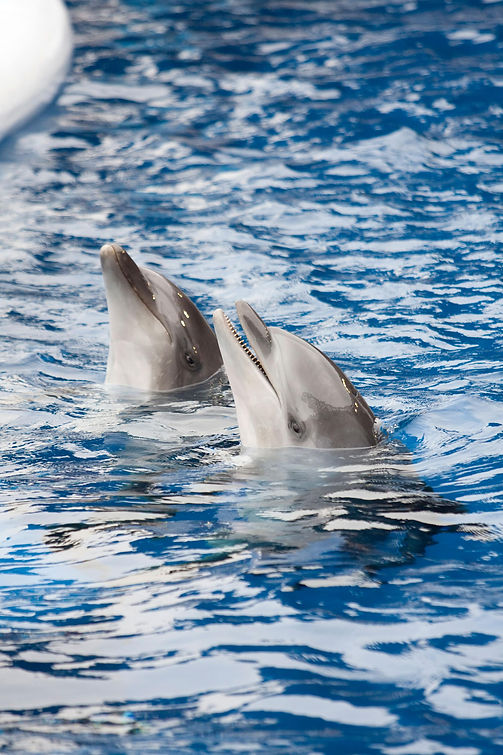
Opened in 2012, this is one of Japan's largest inland aquariums. It exhibits approximately 250 species and a total of about 15,000 animals, including the Japanese giant salamander, a national special natural monument that inhabits the Kamo River that flows through the area, as well as spotted seals and African penguins.